




















Atlassian Team ’26 takeaways: from tools to AI-human orchestration
15.05.2026
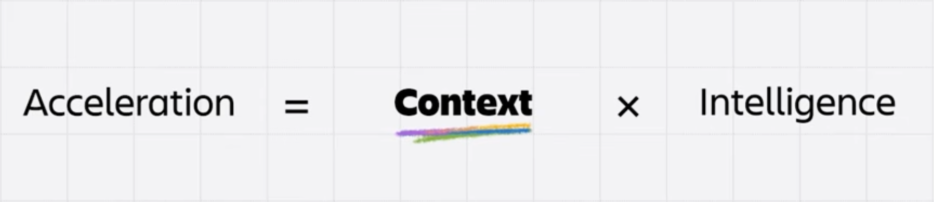
The era of “AI as a chatbot” has officially ended. At Atlassian Team ’26, the global tech community received a clear message: competitive advantage no longer depends on the AI model itself, but on the organizational context provided to it. Sii Poland, a long-standing Atlassian Platinum Solution Partner, attended the event to analyze how Atlassian is evolving into a unified AI control plane.
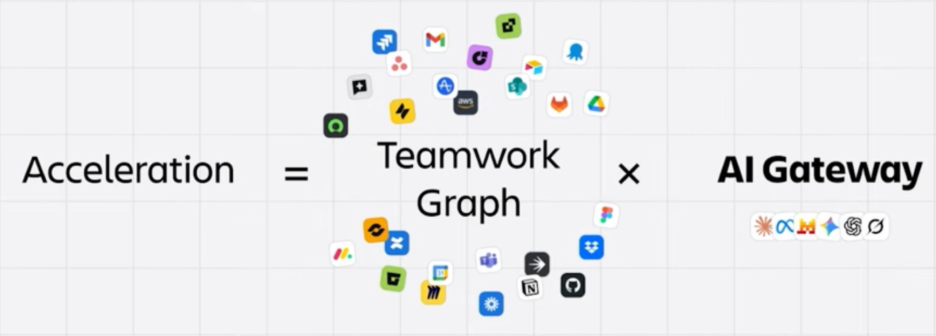
The Teamwork Graph: Your organization’s new nervous system
Atlassian has moved beyond simple data storage to focus on data relationships. The Teamwork Graph, accessible via teamworkgraph.com, serves as the foundation of the modern ecosystem. It connects Jira tasks, Confluence documentation, and real-time code intelligence into a single source of truth.
It’s no longer about where data lives, but how it relates.
With new integrations for Figma and Claude, the Graph bridges the gap between engineering and business.
Outcome: 1 context-driven view across all platforms.
The Teamwork Graph introduces a major architectural shift. Companies should stop treating Jira, Confluence, Assets, and source code repositories as isolated platforms and start viewing them as one connected operational context layer.
This means investments should now focus on:
- Data standardization across projects and departments
- Workflow simplification
- Cleaning legacy documentation
- Improving ownership models for knowledge and assets
- Reducing duplicate or conflicting information sources
The biggest risk is no longer “missing data,” but inconsistent context. AI agents can only operate effectively when relationships between work items, systems, and people are reliable and discoverable.
For many organizations, this is the right moment to review:
- Duplicated Jira projects and workflows
- Inconsistent issue taxonomies
- Abandoned Confluence spaces
- Disconnected integrations
- Unclear ownership of operational knowledge
AI agents can only operate effectively when context is structured, connected, and discoverable across the organization.
Rovo & Agents: from conversation to autonomous execution
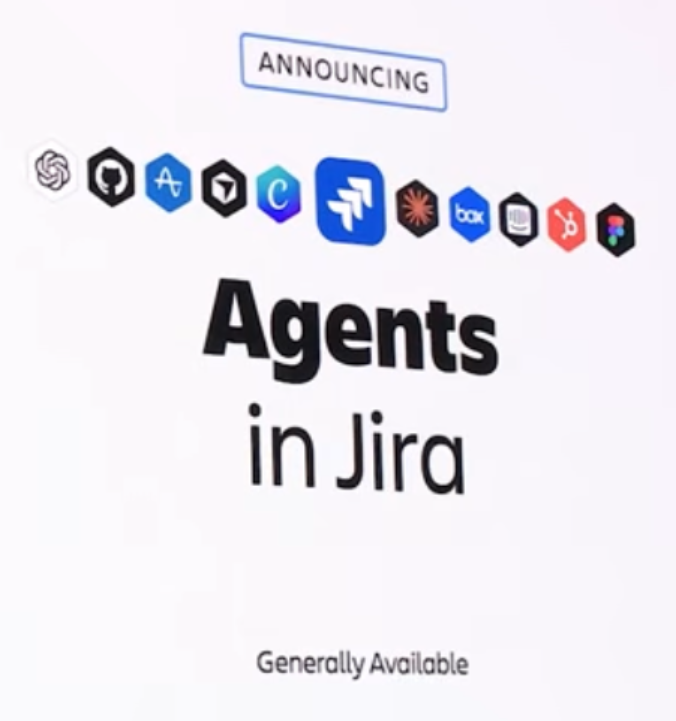
With Agents in Jira reaching General Availability (GA), AI has transitioned from suggesting improvements to executing complex tasks. Jira now functions as an orchestration layer where humans and AI agents collaborate.
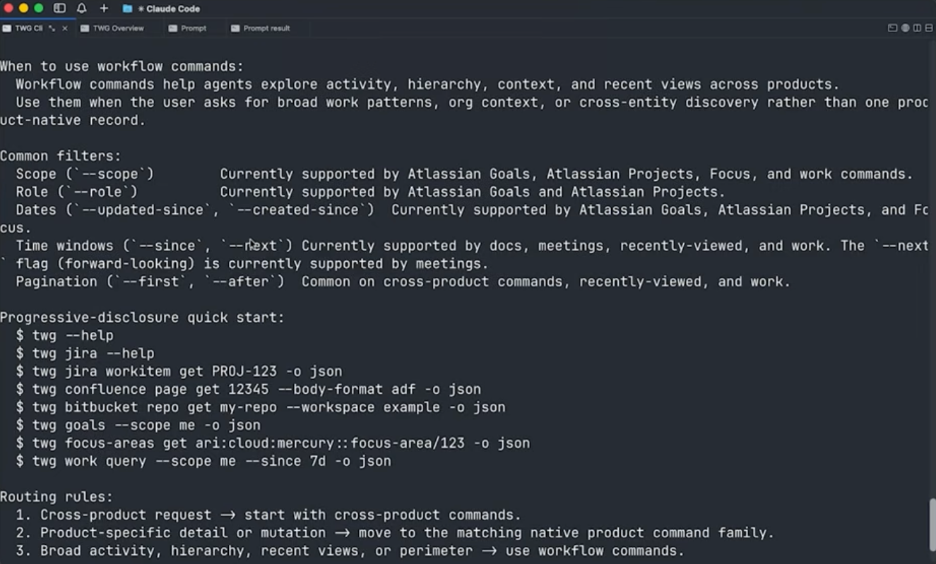
Efficiency: Through MCP and CLI integrations, agents trigger complex workflows, like building a full Work Breakdown Structure (WBS), simply by a status change in a ticket.
Jira is evolving from an issue-tracking platform into an orchestration and accountability layer for both humans and AI agents.
One of the most important announcements was the growing use of MCP and CLI-based integrations, allowing agents to execute workflows, analyze repositories, discover dependencies, and generate operational tasks directly from organizational context.
The keynote demonstrations showed agents:
- Analyzing millions of files and billions of lines of code
- Identifying legacy dependencies
- Discovering hidden relationships between tickets, branches, and documentation
- Generating execution plans automatically
This creates a new operational challenge for enterprises: governance. Organizations should begin preparing approval models, audit trails, permission structures, and AI execution boundaries before large-scale agent adoption becomes operational reality.
The “AI Slop” warning: why data quality is the new security
A recurring theme was a reality check: AI won’t solve organizational chaos; it will only make it more visible. Atlassian introduced a warning against “AI Slop” – low-quality output caused by poor data foundations.
Governance-Led Security: As we give AI more power, Atlassian is doubling down on Agent Governance and Guard integration.
AI will not fix operational chaos – it will expose it faster and more clearly.
Atlassian repeatedly warned against “AI Slop”: low-quality AI outputs generated from fragmented documentation, outdated workflows, duplicated knowledge, and inconsistent operational data.
Historically, poor Jira or Confluence hygiene mainly reduced efficiency. In the agentic era, the same issues may lead to:
- Incorrect AI-generated actions
- Misleading recommendations
- Duplicated execution
- Governance and compliance risks
Organizations should now treat certain standards as foundational AI investments rather than administrative overhead.
They include the following:
- Workflow standardization
- Permissions architecture
- Knowledge ownership
- Operational data quality
Innovations to watch: DIA, feedback, and the end of “search”
Several new products stole the spotlight, signaling a shift toward proactive information discovery.
DIA Browser: A shift from “searching for info” to “info finding you”. It generates content and websites based on your Teamwork Graph and browser history.
Confluence Slides & Remix: Direct competition for traditional tools, allowing users to generate brand-aligned graphics and slides directly from project data.
The shift from “searching for information” toward “AI delivering context proactively” changes how organizations interact with knowledge entirely.
Tools like DIA and Rovo Memory demonstrate a move toward persistent organizational memory, where AI systems continuously learn from tickets, documentation, meetings, repositories, and collaboration history.
The keynote demos highlighted a future where AI systems can:
- Proactively prepare operational briefings
- Generate architecture proposals
- Discover organizational dependencies
- Surface relevant context prior to user search
The key challenge is no longer access to information but ensuring that AI systems can reliably identify the correct operational context and authoritative source of truth across the organization.
A human & AI partnership
The takeaway from Team ’26 is that the most successful organizations won’t replace people with AI but will use Atlassian to bridge the “context gap”.


