























Digital Product Passport: What your company needs to know
22.06.2026
The EU is introducing the Digital Product Passport under the Ecodesign for Sustainable Products Regulation. The requirements will not arrive for every product at the same time. Instead, they will be defined gradually for specific product categories through future rules. For companies selling into the European market, this means the DPP may become a practical condition for placing certain products on the market, rather than a voluntary sustainability initiative.
This is why it should be treated as an operational topic from the beginning. A DPP will influence how a product is identified, how product data is structured, how information is shared with different actors, how repair or service data is made available, and how the product is handled at end of life. In other words, it is not only about environmental communication. It affects the way product information is managed across the lifecycle.
Companies are still trying to understand what it means for their own products, systems, and suppliers. It is a complex subject because it connects several areas that are often managed separately: product data, compliance, supply chain, service, and lifecycle management. At the same time, detailed requirements, standards, and technical approaches are still developing. This is why the pressure feels high even though many parts of the system are still taking shape.
What Digital Product Passport actually is (and what it is often mistaken for)
A Digital Product Passport is structured, machine-readable product data linked to a product through a digital carrier such as a QR code or a similar identifier. It is meant to stay accessible along the value chain and usable by systems, not only by people.
It is just as important to say what it is not. It is not a PDF. It is not a product label. It is not a single software package. In practice, it only works as part of a wider system of identifiers, carriers, repositories, interfaces, and access rules.
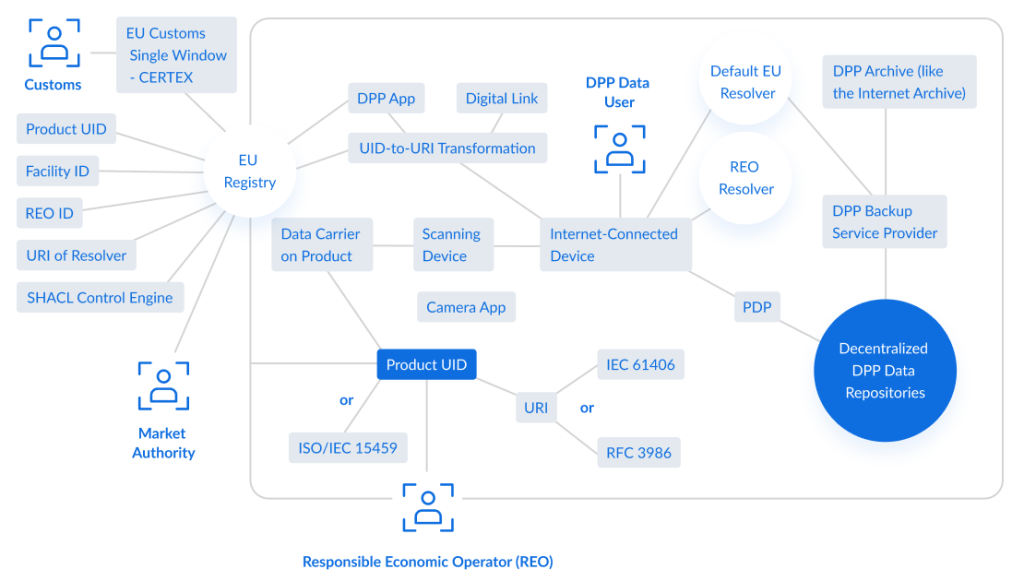
Figure 1 shows this system view. The product is linked to a Product UID (Unique Identifier), which acts as the key for finding the relevant passport data. Different actors, such as the responsible economic operator, market authorities, customs, and data users, interact with the system through registries, resolvers, applications, and decentralized repositories. This is why early planning must include not only the data content, but also identification, access, storage, and long-term availability.
Why DPP is essential for the circular economy
The logic behind the passport is straightforward. Circularity depends on product information remaining available after the product leaves the factory. The familiar 5R model captures this well: reduce, reuse, repair, refurbish, recycle. None of those activities work well without reliable product-level data.
Repair requires service and spare-part information. Recycling depends on material and substance information. Reuse and refurbishment depend on a trustworthy link between the physical product and its digital record. The passport is meant to keep that information available in a usable form over time.
The Battery Passport: What the first real use case shows
The battery sector is the clearest early example of how DPP requirements may work in practice. The battery passport is built around the same basic principles expected in other sectors: a product identifier, a digital carrier, structured data, and controlled access to different types of information. The exact data requirements will differ from one product category to another, but batteries already show the general direction.
The battery example is useful because it makes the concept more concrete. It shows that the passport is not only about publishing sustainability information. It also involves product identity, data ownership, access rights, and lifecycle information. At the same time, being the first major example does not mean that every detail is already settled. The technical and organizational model is still maturing, and other sectors should treat batteries as an early reference point rather than a template to copy directly.
Current roadmap work points to an HTTP URI-based architecture as a likely first route for DPP implementation. In simple terms, this means that scanning the product’s data carrier leads to a web-based identifier or address that can resolve to the correct passport data. This approach is practical because it builds on existing internet technologies that are already widely used and scalable.
What data a DPP actually requires
The exact data set will depend on the product group, but the structure is already fairly clear. The main categories recurring across the material are:
- product identification,
- materials and substances,
- sustainability or footprint indicators,
- repair and maintenance information,
- end-of-life and recycling information.
This means the passport covers more than technical product specifications. It also includes information about what the product is made of, how it complies with relevant requirements, how it can be repaired or serviced, and how it should be treated after use. That is why DPP preparation should be approached as a cross-functional data task from the beginning.
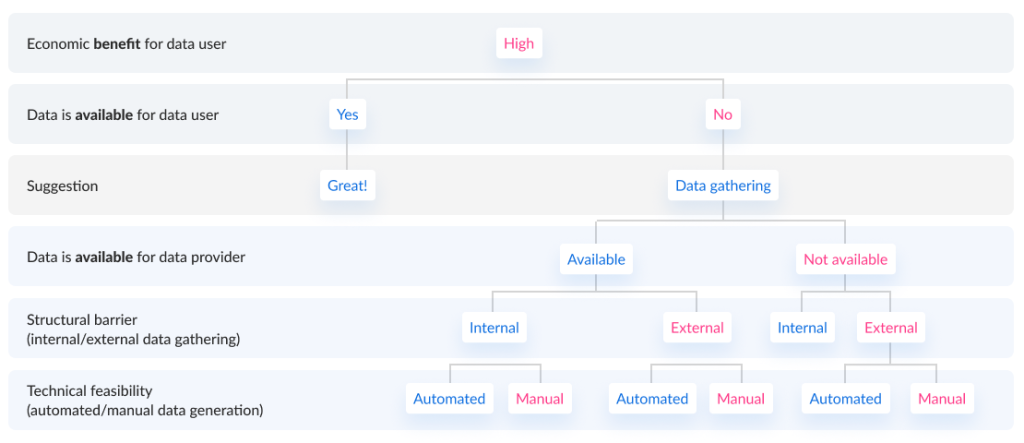
Figure 2 helps explain why this becomes challenging. The figure separates the perspective of the data user from the data provider. In many cases, the information that is most useful for the data user is not immediately available. It first has to be collected, structured, and supplied by another actor in the value chain.
DPP readiness: Where companies actually stand today
Most companies are still at an early stage as of 2026. The standards, architectures, and implementation models are still developing, and readiness varies widely by company size, sector, and place in the value chain. Smaller suppliers are likely to be less prepared, especially where requests go beyond the data they already collect today.
This explains much of the current uncertainty. In many cases the issue is not lack of interest. It is the fact that companies are being asked to connect product, supplier, service, and compliance data into one coherent structure before the full operating model is fully settled.
The real challenges behind DPP implementation
The main difficulties are already visible. Requirements are still being clarified. Supplier data is often incomplete or inconsistent. Internal ownership is spread across different teams. Existing systems were rarely built with this exact use case in mind.
There is also a technical side that needs attention early. The way products are identified, how data is exchanged between systems, how long the data remains available, and who is allowed to access it all affect whether the passport will work in practice. These choices matter especially when products move across suppliers, customers, service partners, recyclers, and public authorities.
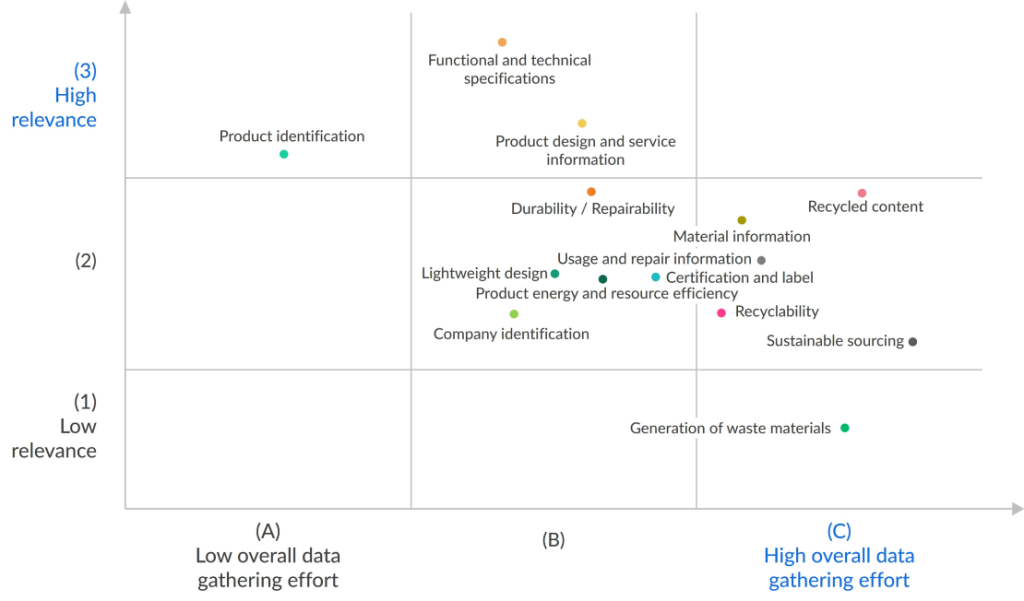
Figure 3 shows that DPP data should not be treated as one large block. Some information is highly relevant and relatively easier to collect. Other information may also be important, but harder to generate because it depends on suppliers, manual collection, or immature data systems. This supports a staged approach: start with the most useful and feasible data, then improve coverage and quality over time.
Where to start: A practical approach to DPP
The first steps are usually practical rather than technical. Identify which products are likely to be affected. Review what data already exists. Find the gaps. Decide what must come from suppliers. Work out which indicators need to be calculated. Then link the relevant information to a product identifier and decide how it will be maintained.

For most organizations, the real starting point is building a clear map of existing data, missing data, and ownership. Once that becomes visible, it is much easier to decide what should be improved first and what can wait. Figure 4 shows one key point: identifier choice is not a minor implementation detail. It shapes how the product connects to data and which technical route becomes possible.
Common DPP mistakes (and how to avoid them)
The most common mistake is treating the passport as a one-time deliverable. In practice, the DPP must remain connected to product changes, supplier updates, service information, and regulatory requirements. It needs maintenance.
Another frequent issue is weak product identification. If the link between the physical product and the digital record is unclear, the passport becomes difficult to trust and update. Supplier data is another major risk. Companies should not assume that information will arrive in the right format or at the right level of quality without preparation. Data requests, validation rules, and follow-up processes need to be planned.
Finally, DPP work often requires more internal coordination than expected. Engineering, sourcing, compliance, sustainability, IT, and aftersales may all hold part of the required information. The earlier these roles are mapped, the smoother the implementation becomes.
What your company should do next
Digital Product Passport will push companies to manage product information more deliberately across the full lifecycle. Identification, material data, supplier inputs, repair information, and end-of-life instructions will need to connect into one reliable structure.
The strongest starting point is a clear internal data map: which products may be affected, which information already exists, which data depends on suppliers, and who is responsible for keeping it current. This early mapping will often reveal the real gaps before any platform decision is made.
Companies that begin with data ownership, identifier strategy, and supplier readiness will be better prepared as product-specific requirements become clearer. The framework is still maturing, but the direction is already visible: DPP will reward organizations that can make product data traceable, updateable, and usable beyond the point of sale.