























Infoshare 2026 wrap-up: AI has become part of everyday work – and that’s what makes it interesting
09.06.2026
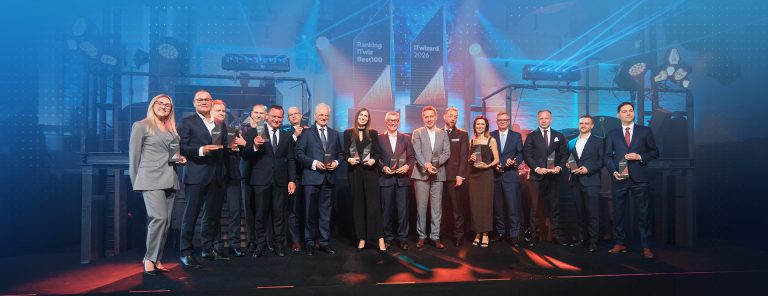
More than 6 000 attendees, 160 speakers, 2 100 networking meetings, and six fully packed thematic stages. Infoshare 2026 in Gdańsk confirmed what many organizations are already experiencing firsthand: we have reached a turning point. AI is no longer a vision of the future. It has become a permanent part of everyday work, along with all the opportunities and challenges that come with it.
The diversity of participants – from startups and non-profit organizations to corporations in the financial, industrial, and technology sectors – made conversations between sessions just as valuable as the presentations themselves. AI is no longer confined to R&D departments or technology enthusiasts. It has entered boardrooms, HR departments, and the daily workflows of professionals who, only two years ago, did not need to have an opinion on it.
Technology is only the tip of the iceberg
One topic that repeatedly surfaced throughout the conference was AI transformation and the factors that determine its success or failure. Organizations that have successfully implemented AI did not win because they had better tools. Their transformations succeeded because they treated AI as a catalyst for changing the way the organization operates. The focus was on processes, roles, and how people interact with technology on a daily basis. And this is precisely where many companies still struggle.
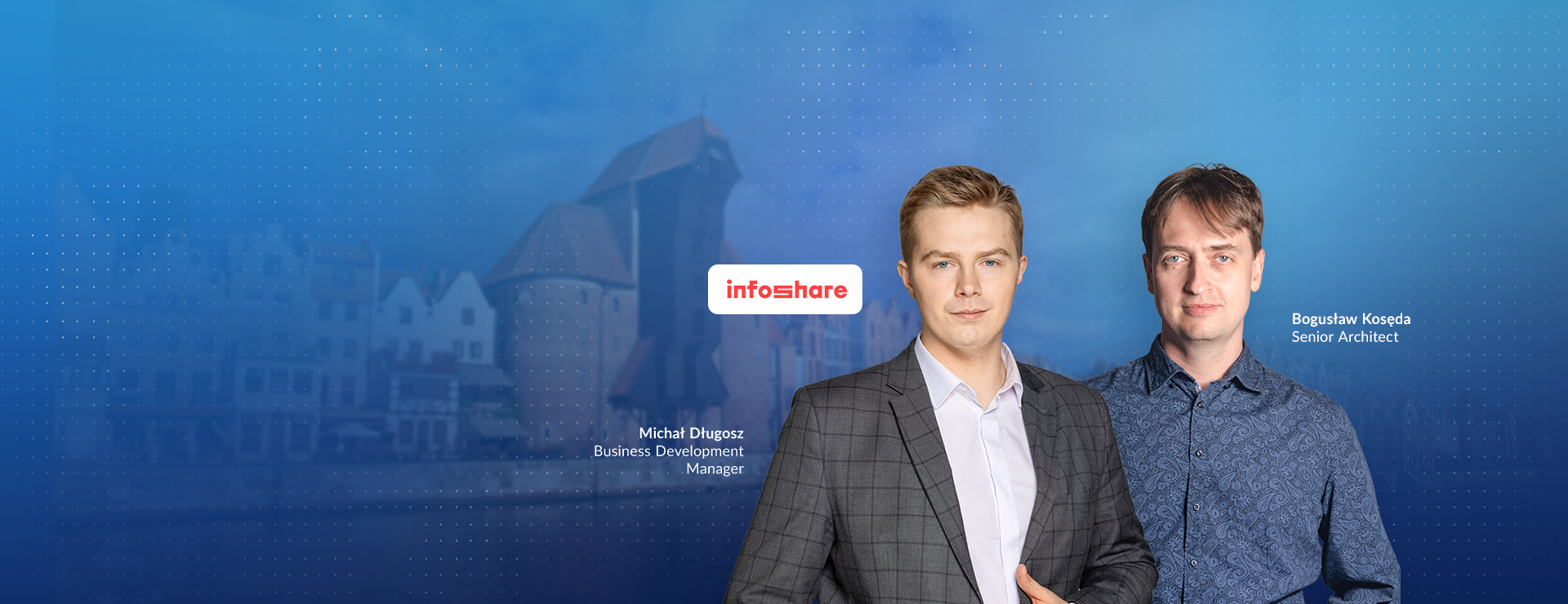
“Even the most sophisticated technology will fail in an organization that has not defined the relationship between humans and AI. Implementation is not the end of the journey – it is where the real journey begins,” – says Bogusław Kosęda, AI Architect at Sii Poland.
Where do the real engineering challenges lie today?
One of the most debated sessions on the AI & Architecture stage revolved around a bold statement: in the AI-native era, coding itself is no longer the primary challenge. AI can generate code quickly and efficiently, but the speed of code generation does not automatically translate into the quality of the resulting system.
As AI tools become more widespread, responsibility is shifting from writing code toward making sound architectural decisions and maintaining high engineering standards. The session demonstrated that AI can dramatically accelerate software development teams, but it can also quietly introduce technical debt. The challenge is to design development processes that leverage AI’s speed without sacrificing quality, predictability, or long-term control over the system’s evolution.
Humans vs. AI in coding. What it means for technology teams
A panel discussion at Infoshare 2026 also addressed a question that has been circulating within developer communities for months: where are the limits of AI today?
The panel brought together two very different perspectives. On one side was the story of a developer who challenged AI in a coding competition and won, demonstrating that human intuition, contextual understanding, and unconventional thinking still provide a meaningful advantage in certain situations. On the other side was the perspective of a co-founder of a company building infrastructure for AI models – later acquired by OpenAI – who has witnessed firsthand both the rapid pace of model development and the boundaries of their capabilities.
BEFORE
- Writing code
- Implementation
- Routine debugging
- Boilerplate development
NOW
- Defining problems
- Designing experiments
- Evaluating outcomes
- Making decisions under uncertainty
The conclusion of the panel was far from pessimistic. Human advantage is not disappearing – it is shifting. The focus is moving away from writing code toward the ability to define the right problems, design experiments, evaluate results, and make decisions with incomplete information. Creativity, high-quality feedback, and critical assessment of AI-generated outputs are likely to become some of the most valuable skills for developers, startup founders, and technology teams in the years ahead.
The AI (r)evolution is already here. The question is who will benefit most
Infoshare 2026 also tackled difficult questions about the social and economic implications of AI. One session, drawing on research from the International Labour Organization (ILO) and the World Bank, highlighted the uneven nature of this transformation while emphasizing that its outcomes are far from predetermined.
Today, AI exposure is concentrated primarily in knowledge-intensive professions, while the benefits of adoption are disproportionately captured by developed economies. These countries have the strongest access to capital, infrastructure, and talent required to leverage emerging technologies. Yet history has repeatedly shown that innovations initially available only to a privileged few, eventually become widely accessible. Generative AI appears to be following the same path.
Paradoxically, the greatest potential for change may emerge where access to advanced tools has historically been the most limited – in small businesses, developing economies, and among people without formal credentials. Under the right conditions, AI could significantly lower barriers to entry for knowledge-based work and specialized professions.
An interesting counterpoint to this global perspective came from a presentation on the Innovation stage focused on the “One-Man Army + AI” model. It illustrated how rapidly the definition of competitive advantage is changing. With the vast majority of people still not using AI on a regular basis, organizations that design their operating models around AI-augmented specialists have an opportunity to build a lasting advantage before these practices become standard across the market.
It’s not about technology itself. It’s about building advantage through it
One of the strongest takeaways from Infoshare 2026 was that AI does not diminish the importance of people. It changes the way people create value. Success is becoming less about execution and increasingly about asking the right questions, making sound decisions, and setting the right direction. This is where competitive advantages will emerge, both for individuals and for organizations.


