


Microsoft Fabric
Bring all your data together in one place with Microsoft Fabric. As a Microsoft Fabric Featured Partner, we will make it easier to get insights and drive better business decisions.
GET THE MOST OUT OF YOUR DATA
We’ll unify your data ecosystem with Microsoft Fabric – a powerful platform that integrates Azure Synapse Analytics, Real-Time Intelligence, Power BI, and Data Factory under one umbrella. With built-in Microsoft security frameworks, you can ensure robust governance, security, and compliance across your entire data lifecycle.
ACHIEVE MORE WITH SII x MICROSOFT FABRIC

Consolidated sources
Our Microsoft Fabric implementation integrates easily with Azure Data services. It bridges SQL queries, data warehouse or Delta Lakehouse structures, and Data Factory pipelines. Our experts help you eliminate data silos, provide a single place for storing and accessing mission-critical data.
Accelerated data warehouse development
We’ll help you build or migrate your warehouse using advanced features like Apache Spark and Delta Lakehouse capabilities or SQL database and SQL queries, all within Microsoft Fabric. Our data engineering best practices guarantee smooth transition, while Microsoft Fabric tooling helps you unify structured and unstructured data for real business value.


Self-service analytics
From interactive Power BI dashboards to advanced transformations – our Microsoft Fabric implementation fosters collaboration and data-driven decisions. Welcome agile pipeline orchestration to tap into data science workflows for deeper analytics.
Enhanced analytics with Azure Synapse & Fabric
We’ll help you use the combined power of Azure Synapse Analytics and Microsoft Fabric – to transform your data strategy.
- Real-time analytics – act on streaming events instantly via Data Activator to enable proactive decisions and immediate feedback loops.
- Lakehouse architecture – merge your data warehouse and data lake approaches to handle both structured and unstructured data without friction.

Scalable and secure data storage with OneLake
OneLake is at the heart of Microsoft Fabric, providing:
- Unified data lake – store assets in OneLake, optimized for large-scale analytics and real-time processing.
- Cost-effective flexibility – expand capacity as your data grows, with high performance and compliance.
- Smarter workloads—run queries and transformations on massive data volumes with Microsoft Fabric's integration across Azure services, Databricks, Snowflake, Python, Apache Spark, and standard SQL engines.
WHY PARTNER WITH US FOR MICROSOFT FABRIC?
Strategic partnership with Microsoft
Sii is a Certified Microsoft Partner – we know Microsoft’s ecosystem inside-out. By choosing Sii, you get access to knowledge of all advanced solutions, top-level support, and best practices from our experts.
300+ data specialists
We’re more than a Microsoft-certified team. We’re the top players with niche skills. Our 300+ data experts are ready to deploy Microsoft Fabric across data engineering, data science, and advanced analytics tasks. Our expertise guarantees you derive maximum ROI from Microsoft Fabric and Azure resources.
Full-cycle data platform support
From proof-of-concept to final rollout – we provide end-to-end management of your Microsoft Fabric platform. Our team covers pipeline optimization, OneLake setup, SQL integration, and more. We also orchestrate security, compliance, and scalability – to make your data environment ready for further development.

meet our microsoft FABRIC team



TRUSTED BY INDUSTRY LEADERS




Data & Analytics Case studies
BENEFIT FROM OUR MICROSOFT FABRIC SERVICES
See how we do it step by step
DATA & ANAlytics NEWS & PROJECTS

Real-Time Intelligence in practice. How companies gain a competitive edge with Sii Poland
Read more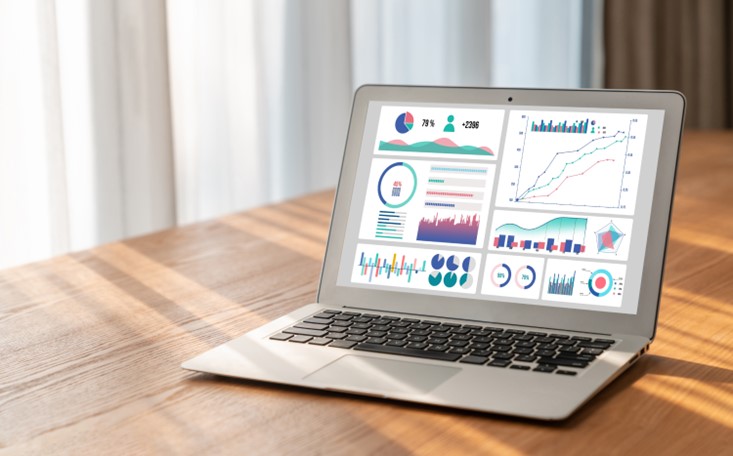
How to design a report/dashboard effectively?
Read more
Redefining data excellence. The collaborative journey of Sii Poland and Snowflake
Read more
Implementation of the Modern Data Warehouse architecture in the Azure cloud
Read more
Automated complex document reading with 92% efficiency? Doubling your search engine performance? With Sii’s AI solutions the sky is the limit!
Read more
History backwards – How to switch from “Business” to “Development” Job
Read moreWHAT YOU NEED TO KNOW
Read out FAQ
Microsoft Fabric – an AI–driven analytics platform – is a unified platform that brings together data and services like Data Factory, Fabric Data Engineering, Fabric Data Science, Real-Time Intelligence, and Power BI. It enables end-to-end data processing, consolidating unstructured and structured data into a single data fabric. The data teams can ingest, transform, manage, and analyze data with high performance and low latency. Essentially, Fabric is a unified solution that integrates all corporate data to help you extract more value from it.
To meet your organization’s data and analytics needs, Microsoft Fabric offers an all-in-one approach that blends data integration, data analytics platform capabilities, and a multi-cloud strategy. It supports data warehouse and data lake architecture, real-time analytics, machine learning models, and data science capabilities – all in a software as a service model. This means you can unify new data sources easily and maintain a secure, adjustable environment.
When you use Microsoft Fabric, you avoid stitching together separate tools. Also, you reduce costs and simplify processes. Because Microsoft Fabric is built on top of the tools that your data team already knows, like Data Factory, SQL, Python, DAX, Power BI, you only need one unified data analytics environment. This approach upgrades and simplifies data pipeline creation, data lake or data warehouse provisioning, and advanced analytics. It also increases agility.
A data lake stores raw files in various data formats, whereas a Lakehouse provides a layer on top of it that provides easy and secure access to that data. Within Fabric, you can manage your unified data analytics platform through OneLake to enable quick data access. This approach eliminates having multiple copies, since a single copy of data can be referenced from different workloads.
Yes, of course it does. Fabric Data factory provides similar capabilities to Azure Data Factory in terms of orchestration, ingestion, and transformations, and it can even connect to your old ADF so you can manage and monitor new and old data pipelines in one environment. Meanwhile, OneLake shortcuts can work with Azure Storage Accounts for smooth access. This solution guarantees you can continue using familiar pipelines and flows without migrating away from proven Microsoft services.
OneLake is a core component of the Fabric platform for centralized data storage – much like a global data lake. All data in Fabric is referenced through OneLake, so you don’t create multiple copies for different analytics tasks. This shortcut approach reduces redundancies and improves data architecture. Data with Microsoft Fabric means simpler versioning and effortless cross-service usage.
Data scientists and developer roles love Microsoft Fabric because it provides an end-to-end environment to process, model, and deploy analytics solutions. With machine learning and data science workloads running on top of the same data, teams can experiment with generative AI projects or set up real-time analytics using current version of data without the need to copy it back and forth. That kind of approach also reduces friction in data integration, so teams can focus on building business value.
Yes. Fabric is a unified platform that supports real-time analytics using sources like Event Hub, Google Pub/Sub Amazon Kinesis, Kafka or Custom Endpoint with Kafka, MQTT or Event Hub protocol. Fabric Real Time Hub provides you with capabilities to store events, transform them into business value, and show them with dedicated dashboards or act on them with data activator. You can harness streaming data from IoT devices, logs, or any other event-based workloads to provide high performance and low latency for immediate insights and decision-making.
Yes. Microsoft Fabric is designed as a data fabric to unify data from multi-cloud sources like Azure and on-prem systems. Its unified platform approach simplifies data access from different locations and offers secure governance. By using data from each environment, you create a cohesive data analytics platform that can adapt as your architecture evolves.
Our complementary services
Join us
Become part of the Power People team