
























PM², as a project management methodology proposed by the European Commission, was initially created based on the essence of other popular methodologies. The team developing its foundations focused primarily on the possibility of its use by European institutions for managing a wide range of projects, including those financed by EU funds. Ultimately, the methodology proved attractive enough that a demand for its application also emerged in the private sector.
This article aims to present the fundamental assumptions of PM² and its unique features that have contributed to its widespread adoption. The paper discusses, among others:
- the structure of the project life cycle,
- the main stakeholder roles and responsibilities,
- key artefacts,
- quality assurance and control mechanisms.
The article also highlights the openness, flexibility, and scalability of PM² and describes the PM² management ecosystem (including PM² Agile, Programme Management, and Portfolio Management: PM² Methodologies).
Assumptions and structure of the PM² methodology
PM² is a project management methodology developed by the European Commission. As with other methodologies, its primary objective was to provide project managers with an effective tool for managing the entire project life cycle. Unlike other approaches, PM² was specifically designed to address the needs of European Union institutions and the projects they undertake. Its transfer to the private sector occurred later, after PM² had demonstrated its effectiveness and flexibility in EU projects.
PM² was designed as a “lightweight” methodology that is easy to implement across different types of organizations. This means it is intuitive, and its processes and tools can be quickly adapted to the specific needs of projects without excessive bureaucracy.
Important: PM² is fully supported by freely available online documentation (including document templates and descriptions of recommended tools) as well as an active community of practitioners.
PM² draws inspiration from many established project management approaches, integrating their key principles into one coherent model. As a result, it represents a combination of international experience and the administrative practices of European institutions. Its development was also influenced by practical experience gained from implementing numerous projects, both within EU institutions and in external organizations.
PM² Methodology – details
The PM² methodology provides:
- a project governance structure,
- process guidelines,
- artefact templates,
- guidance on the use of artefacts,
- a set of effective mindsets and ways of thinking.
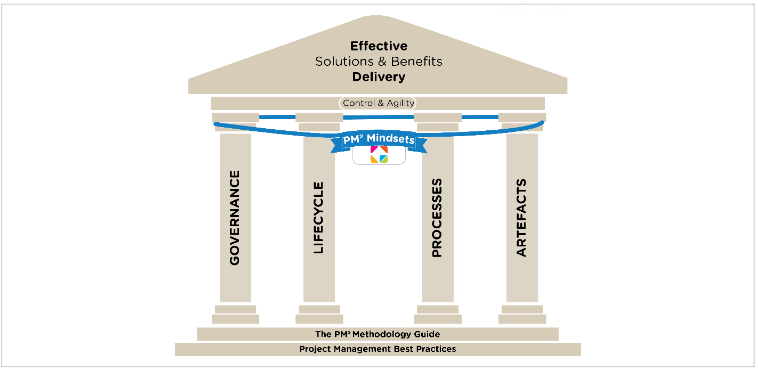
PM² is based on four pillars:
- governance,
- life cycle,
- set of processes,
- artefacts and tools.
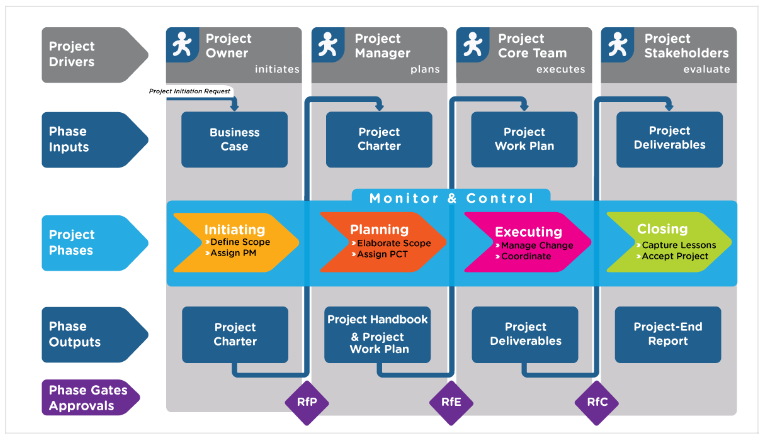
Within PM², a project is divided into four main phases—from initiation, through planning and execution, to closing. Each phase ends with a review of deliverables and an assessment of readiness to move to the next phase. In this way, PM² ensures consistency between planning, execution, and evaluation of project outcomes.
Project stakeholder roles and responsibilities
Within the PM² structure, several roles are distinguished, each responsible for different aspects of the project – from the project owner to the business manager, project manager, and solution provider. Each role has clearly defined responsibilities and decision-making authority, which supports transparency, accountability, and overall decision quality. The scope of decision-making authority is also predefined and described in the form of a matrix.

It is worth noting that PM² places strong emphasis on communication and stakeholder engagement through reporting mechanisms and regular project reviews.
The PM² methodology is based on a system of decision points that determine the project’s readiness to move to subsequent stages. Each of these moments constitutes formal confirmation that the requirements of the previous phase have been met and that the project is approved to proceed further:
- RfP (Ready for Planning),
- RfE (Ready for Executing),
- RfC (Ready for Closing).
Quality assurance and control mechanisms
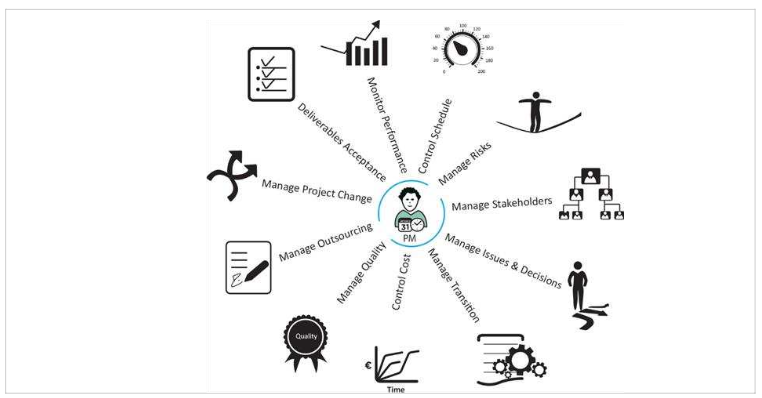
One of the key elements of PM² is continuous monitoring of quality, risk, and plan execution.
The use of standardized reports and tools facilitates progress assessment and enables quick responses to deviations from assumptions. Tools such as the Business Case, Project Handbook, and End-of-Phase Report help maintain consistency between planned objectives and project outcomes. The well-structured and straightforward PM² documentation supports transparency and provides a solid foundation for audits and project reviews, thereby strengthening control and trust in the management process.

The PM² management ecosystem
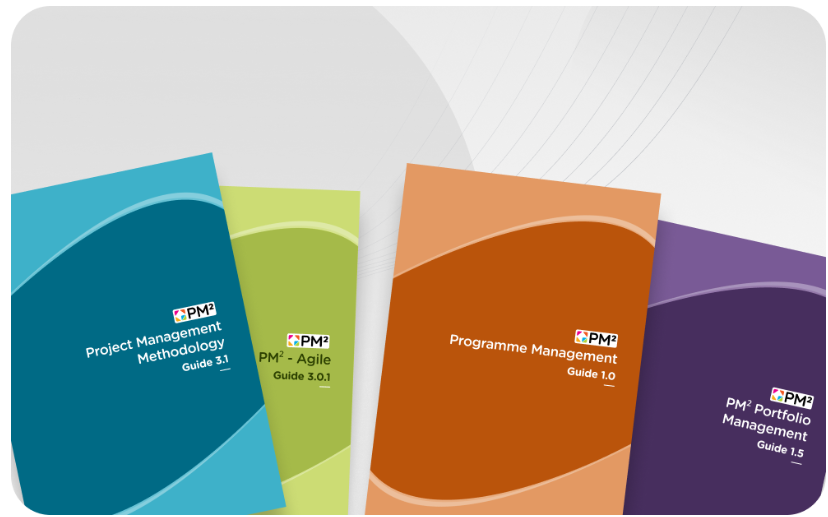
In recent years, PM² has evolved into a comprehensive ecosystem that includes:
- PM²,
- PM²-Agile,
- PM² Programme Management,
- PM² Portfolio Management.
Integration with Agile practices allows for more flexible adaptation of plans to changing requirements while maintaining control over scope and costs. Programme management in PM² enables the coordination of multiple related projects, while portfolio management supports strategic decisions regarding resource allocation.
Openness, flexibility, and scalability of PM²
One of the most significant advantages of PM² is its openness—the methodology has been made publicly available as part of the OpenPM² initiative. This means that both public and private sector organizations can implement it at no cost, adapting it to their own specific needs. PM² is scalable, enabling its practical application in both small local projects and large international programs.
All materials can be found on the official PM² website in several language versions, including Polish: PM² Project Management Guide v3.1 now available in Polish – PM² Methodologies
Benefits of implementing PM²
The application of PM² within organizations offers numerous benefits:
- increased transparency of activities,
- improved communication between teams,
- better utilization of resources,
- greater effectiveness in achieving strategic objectives.
The methodology promotes a culture of accountability and continuous improvement, fostering both efficiency and trust within project environments.

Project Management & PMO
Get end-to-end support for project management – from outsourcing experienced Project Managers and PMO experts, through project consulting and audits, to PMO as a Service
PMO offeringSummary
PM² represents a modern, open, and comprehensive approach to project management that combines best practices from both the public and private sectors. Its evolution toward agility and integration with programme and portfolio management makes it a universal tool for any organization striving for effective, transparent, and sustainable project management.
Sources
- European Commission – PM² Methodology Guide v3.0.1 (2023)
- PM² Alliance – Publications & Open Artefact Templates
- PM² – zapraszamy do zapoznania się z darmową kolekcją rozwiązań z zakresu zarządzania projektami – Portal Interoperacyjności i Architektury – Portal Gov.pl
- Czym jest metodyka PM2 i jak wpływa na zarządzanie












Leave a comment