






















In an era of rapid digital transformation, deploying ServiceNow is only half the battle. The key to maximizing return on investment (ROI) lies in deliberate architecture that eliminates technical debt and enables the rapid rollout of new modules.
In this article, we examine how an “Out-of-the-Box First” mindset paired with intelligent integration design drives system stability and performance. Learn how to avoid common architectural pitfalls that hinder enterprise scalability.
The new era of enterprise service management
The traditional model of enterprise process digitization relied on deploying dozens of point applications and manually wiring them together. In modern, fast-shifting IT environments, this fragmented approach piles on massive technical debt and paralyzes innovation.
The market has shifted decisively toward integrated business platforms, led by the ServiceNow AI Platform. It is no longer just an IT ticketing tool; it serves as the central digital nervous system of the enterprise.
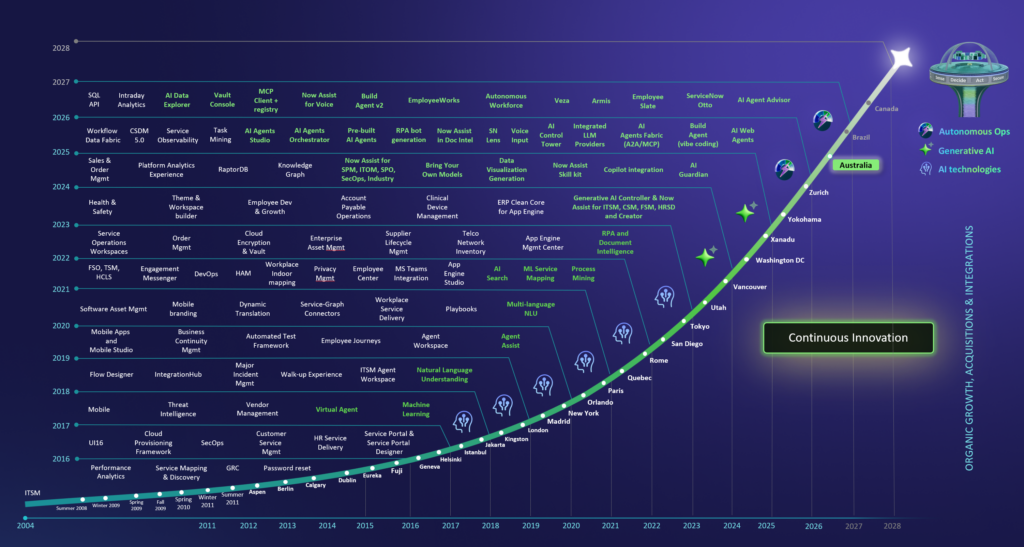
As Solution Architects at the ServiceNow Competency Center at Sii Poland, we consistently observe the same challenge across financial, manufacturing, and telecommunications clients: procuring licenses and completing Phase 1 is only the starting point.
The true test arrives 2-3 years later when organizations want to expand into modules like Customer Service Management (CSM), HR Service Delivery (HRSD), or IT Operations Management (ITOM) – or introduce generative AI capabilities.
Is your instance primed to adopt native machine learning and GenAI models, or is it trapped under years of brittle, legacy scripts?
Here is how to architect a ServiceNow ecosystem designed to keep pace with enterprise growth.
“Out-of-the-Box First” – why the standard became the new premium?
For years, enterprise IT operated under the assumption that systems should adapt 100% to existing, often inefficient organizational habits. In the ServiceNow AI Platform, that mindset directly causes extreme over-customization.
Writing custom scripts where native capabilities or standard workflows already exist incurs technical debt. With each platform release, custom code demands audits, re-testing, and remediation.
The OOB principle in the AI era
Out-of-the-box design is now an AI requirement. Large language models and machine learning features built into suites like Now Assist are trained and optimized on ServiceNow’s standardized data schemas.
- Configuration over customization: Prioritize low-code/no-code tooling such as Flow Designer, Decision Tables, and UI Builder over bespoke scripting.
- AI readiness: The closer an instance stays to OOB standards, the faster and cleaner AI module rollouts become. The system naturally understands task context when the underlying data matches platform patterns.
- Automated Test Framework (ATF): Clean baseline structures unlock ATF, slashing post-upgrade regression testing from weeks to hours. ATF easily validates both custom extensions and core business logic. Architectural success relies on:
- Modular testing: Designing parameterized, reusable components (Test Step Configurations, templates) to build scalable regression test suites.
- OOB Quick Start Tests: Cloning and adapting the pre-built test suites ServiceNow provides for core workflows (ITSM, HRSD, CSM).
CMDB and CSDM: The bedrock of an intelligent platform
Scalable enterprise AI cannot exist without clean, structured data. In ServiceNow, the Configuration Management Database (CMDB) paired with the Common Service Data Model (CSDM) provides this operational baseline.
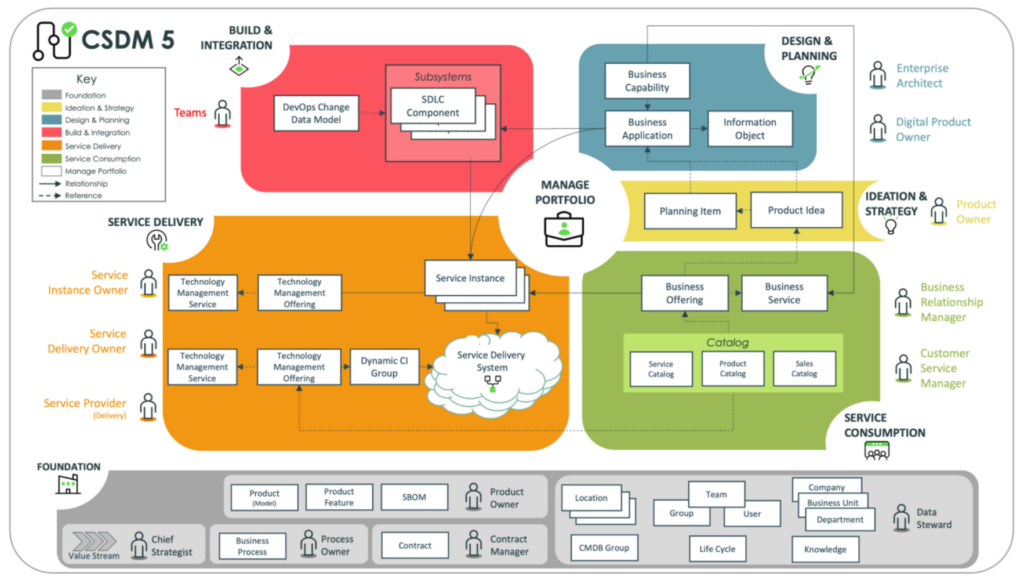
CSDM acts as the shared dictionary and blueprint connecting infrastructure, cloud workloads, and applications directly to business services and strategic outcomes.
[Learn more about Common Service Data Model (CSDM) w ServiceNow]
How CMDB quality fuels AI?
AI features do not operate in a vacuum; when users or support agents leverage Now Assist, the engine references relationships mapped inside the CMDB.
- Predictive Intelligence & AIOps: Accurate CSDM dependencies allow ITOM Health and ML models to filter monitoring noise, correlate alerts, and pinpoint Root Cause within seconds.
- Generative AI for Agents: Now Assist for ITSM generates accurate summaries and resolution steps only when Configuration Item (CI) relationships are reliable and intact.
At Sii Poland, we implement Service Graph Connectors—certified, high-throughput pipelines that ingest external data (such as Azure, AWS, SCCM, and Dynatrace) into the CMDB while minimizing duplication and human error.
Now Assist & Hyperautomation: embedding AI directly into workflows
Enterprise AI has evolved from an external capability patched in via complex APIs to a native execution layer within the ServiceNow AI Platform. Modern system design no longer asks if AI should be used, but where in the workflow it should remove friction for the user.
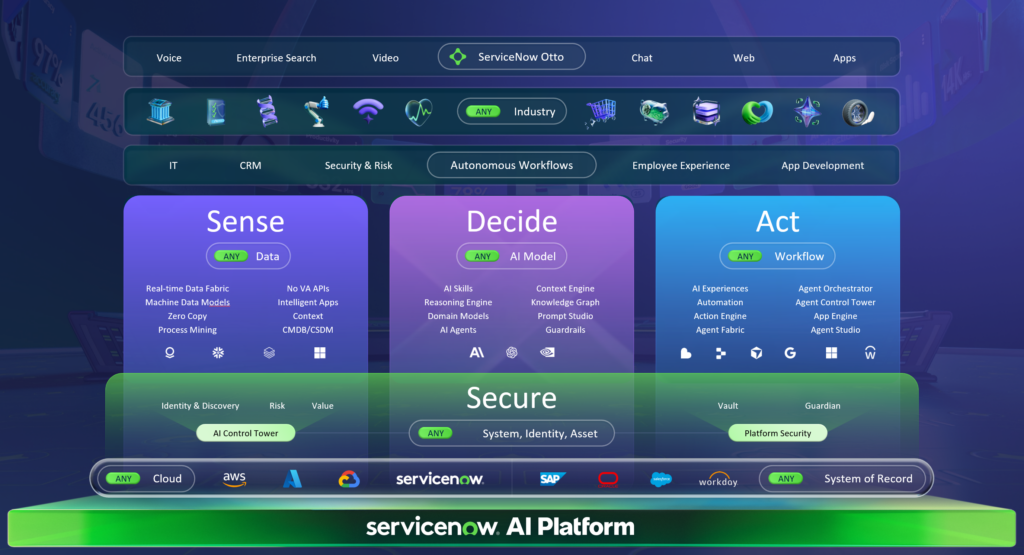
Core architectural AI pillars
- Now Assist (Generative AI):
- Summarization & context: Automatic generation of Incident, Problem, and Case summaries to accelerate handoffs between resolver teams.
- Conversational self-service: LLM-powered Virtual Agents understand natural language and deliver contextual answers directly from knowledge bases rather than dumping raw search links.
- Now assist for code: In-platform code completion and generation for developers, speeding up delivery while reinforcing clean coding standards.
- Predictive Intelligence (Machine Learning):
- Automatically classifies, prioritizes, and routes incoming work based on historic operational patterns.
- Workplace & Process Automation:
- Pairing AI with Process Mining, Robotic Process Automation (RPA), and Integration Hub enables hyper automation workflows that flag bottlenecks and trigger automated fixes.
Intelligent integrations: flexibility without performance degradation
Enterprise platforms cannot operate in isolation; ServiceNow must connect smoothly with ERPs (SAP), CRMs (Salesforce), data lakes, HR systems, and engineering pipelines (Jira, GitHub).
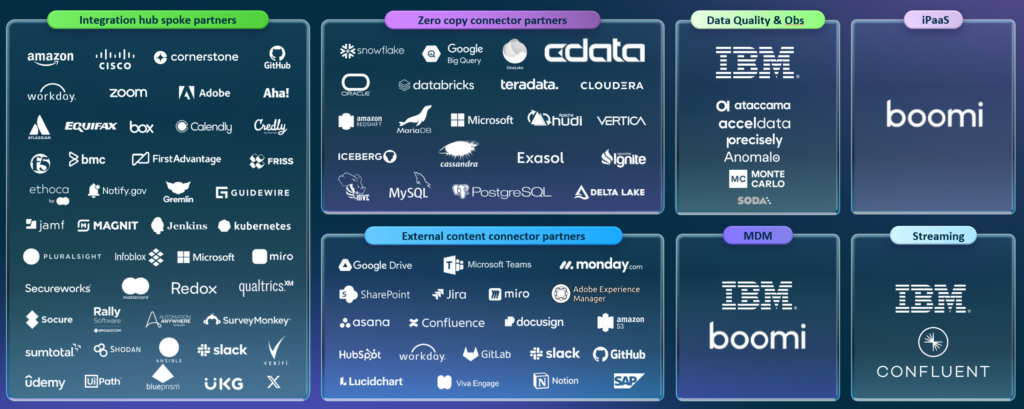
To scale integration architecture alongside rising data volumes, follow three principles:
- Leverage Integration Hub & pre-built Spokes: Replace custom, maintenance-heavy REST/SOAP scripts with Integration Hub spokes featuring native OAuth handling, error logging, and retry logic.
- Asynchronous processing & data lifecycle management: Transactional tables holding millions of historical records degrade indexing performance, slow reporting, and weaken AI precision. Scalable designs incorporate:
- Archive Rules: Regularly moving inactive records to dedicated archive tables (ar_*), maintaining compliance and auditability while keeping active tables lean.
- LLM Optimization: Now Assist searches are faster and more compute-efficient when models query active operational datasets instead of outdated records.
- Dynamic translation & AI: Global operations require multi-language support. Using the Dynamic Translation Client API translates tickets and user comments in real time via native AI or cloud translation engines, enabling unified support teams across multiple regions.
Governance and instance health: sustaining velocity over time
A solid architecture diagram means little without technical discipline across development teams. As instances expand, multiple internal squads and external partners often work concurrently, making Architecture Boards and Design Authorities essential.
Tooling & practices
- Instance Scan: Runs automated, continuous checks against best practice deviations, scripting flaws, and security vulnerabilities.
- HealthScan: Conducts deep health audits to identify sub-optimal database queries and deprecated APIs before code reaches production.
- Sii Competency Center Support: Delivers certified implementation delivery, architecture oversight, security audits, and continuous managed services.
Sii x ServiceNow
With the cloud-based ServiceNow AI platform, we automate processes and facilitate the work of departments to increase productivity within entire organizations.
ServiceNow offeringSummary
The ServiceNow AI Platform has the power to redefine how modern businesses operate. Whether it acts as an engine of continuous growth or a costly maintenance sink depends entirely on early architectural decisions and consistent governance.
By committing to an Out-of-the-Box First posture, structuring data around CSDM, and weaving native AI directly into business workflows, you create a foundation built to endure.











Leave a comment