





















Over the past two decades, the automotive industry has been the driving force behind economic growth in Europe. Between 1999 and 2024, European companies became leading manufacturers through their foreign expansion. They generated a significant share of demand for products and services in other key sectors of the European economy, including electrical engineering, chemicals, and logistics.
This is particularly true of the powerful automotive cluster in southern Germany (Bavaria and Baden-Württemberg), with German manufacturers’ factories accounting for 80% of premium cars sold worldwide. Without the automotive industry, there would have been no decade of uninterrupted economic growth in Germany, Italy, or France.
Global trade wars and political tensions have undermined the development model of European automotive companies, which was based on combustion engines and exceptionally efficient global supply chains that exploited the competitive advantages of different regions of the world. The automotive industry in Europe is also ceasing to be a pioneer in new technologies, such as vehicle digitization and the development of autonomous driving systems.
Volkswagen was the first German company to declare a complete technological turnaround and allocate €30 billion to investments in digitization (including the creation of a platform exclusively for autonomous and electric cars). If this plan succeeds, the company will be able to produce cars that match Tesla’s performance.
In this article, you’ll learn how UX and UI are shaping the development of autonomous vehicles and the digital transformation of the automotive industry. You’ll discover key design challenges – such as building trust, ensuring safety, and redefining the user’s role – that highlight UX as a critical source of competitive advantage in the industry.
Market Research: Challenges facing the automotive industry
New technologies pose a unique threat to European premium manufacturers, who may be forced to radically change their business models. Until now, luxury has been defined by a car’s performance. They face the difficult task of defining what luxury means. It seems that the only significant, if not the only, way to deliver the quality and innovation of luxury cars is to develop the next generation of self-driving-car software and deliver the right value proposition to the “digital customer.”
Digitization, increasing automation, and new business models have revolutionized other industries, and the automotive industry will be no exception. These forces are giving rise to four disruptive technology-driven trends in the automotive sector:
- diverse mobility,
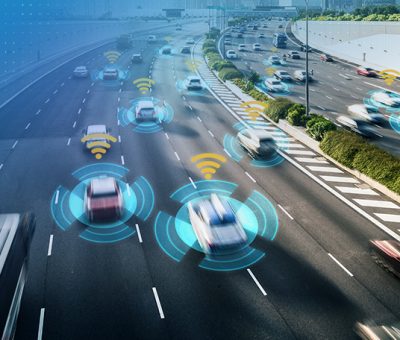
- autonomous driving,
- electrification,
- and connectivity.
Driven by shared mobility, connectivity services, and feature upgrades, new business models could expand automotive revenue pools by about 30 percent, adding up to $1.5 trillion.
In the last year, more than 30% of all automotive patents were self-driving and new IT technologies. The leaders in new tech patents in 2024 were: Toyota, Hyundai, Tesla, Ford, Robert Bosch, and Denso. According to a study by the Oxford Institute, in the next few years, automotive companies can be expected to hire a large number of IT specialists, including primarily developers and UX specialists.
Problem statement: UX challenges for self-driving cars
To add value, key players in the automotive industry are increasingly understanding and researching trends in the development of self-driving cars and, more importantly, the challenges associated with designing software for them.
However, trust is not something that autonomous cars can easily earn. Technology is advancing at a pace that previously seemed impossible, but integration is far from perfect.
The following research questions will illustrate the concerns of future users of autonomous cars:
- Is the car safe to drive?
- Are humans ready to trust self-driving cars?
- Does the design stimulate trust in the driver?
The design must be safe and reliable, but you also have to beat the vigilant driver. Developers can fully optimize unmanned driving technology, but its future is bleak if users are unwilling to use these vehicles.
The role of UX and UI specialists
It’s up to UX and UI designers to address the challenges that can impede the adoption of self-driving smart cars and to devise solutions that foster safe, tech-savvy confidence.
Interviews with UX industry experts and automotive think tank directors gathered insights into current user experience issues in designing software for autonomous cars. It turns out that trust and safety are not the only issues UX designers have to deal with.
Key areas of design
Experts shared their opinion on how UX design will impact the future of autonomous car apps. All of them discussed four key areas of design.
User trust and communication
- Manual control at least initially: The transition from driver to the passenger seat is not an easy task for most people. This is a whole new experience, a series of systems that can take some time for the driver to feel completely comfortable. Experts recommend combining automation and manual control to ease the driver’s burden, at least until confidence in the self-driving car increases.
- Appropriate communication with passengers: The average consumer is not ready to get into the car and be 100% reliable. Experts believe that passengers holding the steering wheel will need some signal to indicate that self-driving cars have been around for 100 years. Automakers have been experimenting with private cars since at least the 1920s.
- Building confidence: Users need to feel confident in the car’s decision-making abilities, which requires clear, frequent, and meaningful communication about what the vehicle is doing and why.
- Appropriate trust: The goal isn’t always to maximize trust, but to achieve “appropriate” trust. Over-trust can lead to complacency and disengagement, while under-trust can hinder adoption.
- External communication: The vehicle must also communicate with pedestrians, signaling when it is safe to cross, effectively proving itself as a reliable “co-pilot”.
Information architecture design
- Information overload: The vast amount of data from sensors and systems can overwhelm, requiring a balanced approach to avoid disengagement or stress.
- Interface for passengers: As humans transition from drivers to passengers, the interface must shift from one of active control to one of reassurance and passenger comfort.
- Personalization: The in-car environment needs to be personalized to feel like an extension of home or office, incorporating features like dynamic lighting, sound, and adjustable seating.
Handling unpredictable situations
- Edge cases: Designers must address how the system handles unpredictable events such as sudden detours, protesters, or unusual road conditions, ensuring smooth transitions of control.
- Graceful escalation: The interface needs to facilitate a smooth shift from autonomous mode to shared control or manual override when necessary, preventing fear or friction for the user.
Transitioning human roles
- Pilot to monitor: Users will shift from actively driving to monitoring the system, requiring a new set of skills and a new way of interacting with the vehicle.
- Manual override: Offering a manual override, or “co-pilot mode,” is crucial for building user confidence and allowing flexibility when the autonomous system is unsure.
Self-driving cars are not the end of the story…
Self-driving and safety issues are just some of the challenges facing UX specialists in the automotive software industry. What about connectivity and, in the longer term, autonomous technology? Will they turn the car into a platform where drivers and passengers can use their travel time to enjoy new forms of media and services, or devote it to other personal activities? The increasing speed of innovation, especially in software-based systems, will require cars to be upgradable. As shared mobility solutions with shorter lifecycles become more common, consumers will be constantly aware of technological advances. This will further increase demand for upgradability in privately held cars as well. The following User Experience trends could be visible in the automotive sector.
#1. Increase in car sales
Despite a shift toward shared mobility, vehicle unit sales will continue to grow, but likely at a lower rate of about 2 percent per year.
A detailed analysis suggests that dense areas with a large, established vehicle base are fertile ground for these new mobility services, and many cities and suburbs of Europe and North America fit this profile.
New mobility services may cause a decline in private vehicle sales. Still, this decline is likely to be offset by increased sales of shared vehicles, which require more frequent servicing due to increased exploitation and wear and tear.
#2. Changes in mobile consumer behavior
Consumer mobility behavior is changing, leading to up to 1 in 10 cars sold in 2030 potentially being shared vehicles and the subsequent rise of a market for fit-for-purpose mobility solutions.
Consumers today use their cars as all-purpose vehicles, whether they are commuting alone to work or taking the whole family to the beach. In the future, they may want the flexibility to choose the best solution for a specific purpose, on demand, and via their smartphones.
We already see early signs that the importance of private-car ownership has declined. In the United States, for example, the share of young people (16 to 24 years) who hold a driver’s license dropped from 76 percent in 2000 to 71 percent in 2013, while there has been over 30 percent annual growth in car-sharing members in North America and Germany over the last five years.
Consumers’ new habit of using tailored solutions for each purpose will lead to the emergence of specialized vehicle segments designed for very specific needs. For example, the market for a car specifically built for e-hailing services – that is, a car designed for high utilization, robustness, additional mileage, and passenger comfort – would already be millions of units today, and this is just the beginning.
#3. User segmentation criteria
City type will replace country or region as the most relevant User segmentation dimension that determines mobility behavior and, thus, the speed and scope of the automotive revolution.
Understanding where future business opportunities lie requires a more granular view of mobility markets than ever before. Specifically, it is necessary to segment these markets by city types based primarily on their population density, economic development, and prosperity. Across those segments, consumer preferences, policy and regulation, and the availability and pricing of new business models will diverge significantly.
In megacities such as London, for example, car ownership is already becoming a burden for many due to congestion fees, parking shortages, traffic jams, and so on. By contrast, in rural areas such as Iowa, United States, private-car use will remain the preferred mode of transport.
#4. Addressing technological and regulatory issues
Once technological and regulatory issues have been resolved, up to 15 percent of new cars sold in 2030 could be fully autonomous, based on User Experience.
Fully autonomous vehicles are unlikely to be commercially available before 2030. Meanwhile, Advanced Driver-Assistance Systems (ADAS) will play a crucial role in preparing regulators, consumers, and corporations for the medium-term reality of cars taking over control from drivers. The market introduction of ADAS has shown that the primary challenges impeding faster market penetration are pricing, consumer understanding, and safety/security issues.
#5. New forms of competition
The industry is transforming from competition among peers toward new competitive interactions, but also partnerships, and open, scalable ecosystems.
To succeed, automotive manufacturers, suppliers, and service providers need to form alliances or participate in ecosystems – for example, around infrastructure for autonomous and electrified vehicles.
#6. Adapting to challenges
With innovation and product value increasingly defined by software, OEMs need to align their skills and processes to address new challenges like a:
- software-enabled consumer value definition,
- cybersecurity,
- data privacy,
- and continuous product updates.
#7. Product and service diversity
Car manufacturers must further differentiate their products/services and change their value proposition from traditional car sales and maintenance to integrated digital services, developed based on User Research.
This will put them in a stronger position to retain a share of the globally growing automotive revenue and profit pool, including new business models such as online sales and mobility services, and cross-fertilizing the opportunities between the core automotive business and new mobility business models.

Consulting
Our team of professionals will provide you with expert advice on process optimalization and automation, change management and business agility.
Consulting offeringSummary
It is important to understand that implementing UX methods is not enough to ensure the success of business transformation in the automotive sector. Various methodologies and design approaches can help here.
One of them is the UX Strategy combined with business model development. It offers more possibilities and allows us to define and focus on solving a real problem from the perspective of various stakeholders in the transformation process: business, market, competition, employees, and users. The winners will be the organizations that engage stakeholders, employees, and customers in the very early stages of the car software design process.
Planning such a strategy can be summarized in a few general steps:
- prioritizing data,
- defining strategy,
- discovering products,
- setting metrics,
- and optimizing.












Leave a comment