























SAP EWM (Extended Warehouse Management) is a modern warehouse management tool. It can be considered the successor to the legacy SAP WM module, offering many more possibilities for optimizing logistics processes.
In this article, I will answer questions about why it is worth implementing EWM and the benefits of implementation for the client. I will also outline how a consultant can help a customer choose the right version of the product – Basic or Advanced – for themselves. To do this, you must present how these versions differ and then analyze the client’s needs and business processes. I will suggest how this can be done and what can be helpful.
Benefits of implementing SAP EWM
Let’s start with the benefits that implementing EWM brings to an organization. Implementing SAP EWM (Extended Warehouse Management) can provide the organization with a range of benefits that impact the optimization of warehouse processes, increased operational efficiency, and improved resource management.
Here are the key added values that the client can achieve through the implementation of SAP EWM:

Optimization of warehouse processes
SAP EWM allows for complete automation and optimization of many warehouse operations, which leads to the following:
- Increased warehouse throughput – by better planning of warehouse operations, managing the flow of goods, and automating key tasks.
- Reduced operation time – the system allows for faster receiving, storing, and shipping of goods through warehouse location management, cross-docking, and dynamic task assignment features.
- Improved inventory management – SAP EWM supports precise real-time inventory tracking, helping reduce stock levels and minimize errors in inventory management.
Reduction of operational costs
- Process automation – implementing SAP EWM can significantly reduce the need for manual handling, allowing the company to save on labor costs and reduce the risk of errors.
- Better resource control – the system enables efficient use of warehouse resources (e.g., equipment and staff) through resource management features, leading to lower operational costs.
- Optimization of warehouse space – with SAP EWM, it is possible to manage warehouse locations better, allowing for more efficient use of available space and reducing costs related to renting or expanding the warehouse.
Increase in operational accuracy
- Precise tracking of goods – SAP EWM enables monitoring of goods at every stage of the warehouse process, leading to fewer errors, such as picking or shipping goods.
- Better quality control – the system supports advanced quality control processes (e.g., batch control), which contributes to improving quality standards and minimizing the risk of complaints.
Scalability and flexibility
- Adaptation to future growth – SAP EWM is a scalable system, meaning that the company can easily expand its functionalities as the business grows and warehouse operations become more complex. This is particularly important for companies planning expansion or increasing warehouse operation volumes.
- Flexibility in process adaptation – SAP EWM allows for the configuration of warehouse processes based on the company’s specific needs, enabling flexible management of even the most demanding operations.
Increased work efficiency
- Better management of human resources – the system enables real-time task assignment to employees, allowing for optimal use of their time and increasing operational efficiency.
- Real-time task management – SAP EWM allows for monitoring and managing the work of warehouse teams in real-time, enhancing the operational flow and minimizing downtime.
Support for warehouse automation
SAP EWM offers extensive integration capabilities with warehouse automation systems (e.g., robots, conveyor systems, sorters). This allows the organization to:
- Automate key operations – such as order picking, sorting goods, or internal transportation within the warehouse, leading to increased efficiency and reduced error rates.
- Effectively integrate with IoT technologies – enabling real-time monitoring of machines, goods, and resource status.
Improved customer satisfaction
- Faster and more reliable deliveries – SAP EWM supports optimizing order picking and shipping processes, leading to shorter order fulfillment times and greater delivery punctuality.
- Better communication with the customer – by precisely tracking goods and inventory, the company can provide customers with more accurate information about product availability and order fulfillment times.
Integration with other SAP systems
SAP EWM is part of the SAP ecosystem, enabling easy integration with other modules such as SAP ERP, SAP S/4HANA, SAP Transportation Management (TM), SAP GTS, and SAP Manufacturing. This allows the company to:
- Integrate warehouse management with other business processes, such as production, sales, or transportation, to improve the coordination of activities across the organization.
- Gain full visibility into business data through data consistency from various business areas, facilitating better strategic decision-making.

Support for regulatory compliance
SAP EWM offers features that help companies maintain compliance with local and international legal regulations as well as industry standards, such as:
- Batch and serial number tracking is crucial in industries like pharmaceuticals, food production, and automotive manufacturing.
- Compliance with safety regulations through features for managing hazardous materials inventory.
Implementing SAP EWM provides significant added value by optimizing warehouse processes, reducing operational costs, increasing work efficiency, improving resource management, and supporting automation.
The system’s scalability and flexibility make it ideal for small and large companies looking to streamline their warehouse operations and prepare for future growth. Integration with other SAP systems and the ability to monitor operations in real time makes it a key tool for companies aiming to gain a competitive advantage in the market.
Which version of SAP EWM should you choose: Basic or Advanced?
We face another decision once we have convinced the client to implement the EWM system. Which product version should be chosen – Basic or Advanced? With our support, the client must make this decision. However, before assisting the client and analyzing current processes and needs, we must first present the key differences between these two system versions.
The Basic and Advanced versions differ in functionality and complexity, which impacts the choice of the appropriate version based on the company’s business needs.
Below is a comparison of the functionalities between the Basic and Advanced versions:

Key differences
The following table presents the key differences between the Basic and Advanced versions:
| Area | Basic | Advanced |
| Scope of functionality | The Basic version has a limited scope of functionality and is available as part of the standard SAP S/4HANA implementation. It includes core warehouse management functions such as: Inventory and warehouse location management. Goods receipt and issue processing. Internal warehouse movement management. Order picking. Basic internal transportation management. | The Advanced version offers a complete set of warehouse management functions Advanced resource management (employees, equipment) with the ability to dynamically assign tasks. Support for automation and integration with advanced warehouse systems (e.g., automated conveyors, robots). Advanced warehouse operation planning features. Cross-docking and batch management of goods. Built-in warehouse space optimization functions. Support for more complex logistics processes, such as returns management, order consolidation, and quality control. |
| Automation and resource management | It only offers basic warehouse operation management functions, with limited process automation. It does not support full integration with advanced warehouse automation systems (such as robots or automated shelving), which may be critical for companies with higher automation requirements. | It enables full automation of warehouse processes and advanced management of warehouse resources (employees, equipment). It integrates with automated warehouse systems and technologies such as conveyors, robots, and RFID systems. It features advanced algorithms for optimizing employee work, leading to better resource utilization and increased operational efficiency. |
| Warehouse space management | It enables basic warehouse space management, such as assigning locations to goods and simple inventory relocation operations within the warehouse. Lacks advanced space optimization features. | It offers advanced warehouse space management features, such as dynamic location assignment, space utilization optimization, and advanced storage strategies. Supports the management of high-bay warehouses, which is crucial for large warehouses with complex infrastructure. |
| Inventory management | It offers basic inventory management functions, such as tracking goods in the warehouse, basic picking strategies, and inventory level management. | It enables advanced inventory management, including batch control, serial number management, and tracking of batches and serial numbers throughout the supply chain. Supports more advanced picking strategies, allowing for better management of large volumes of orders and goods. |
| Quality control and cross-docking | It does not offer advanced quality control or cross-docking features. These processes must be carried out in a more limited scope or through other systems. | It includes advanced quality control features, allowing the company to perform inspections at various stages, such as during goods receipt or issue. Supports cross-docking, directly transferring goods from the receiving point to the shipping point, eliminating the need for long-term storage, and speeding up logistics operations. |
| Scalability and Future Growth Potential | It is more limited in scalability and flexibility, making it suitable for smaller companies or warehouses with simpler processes. Additional configuration or migration to SAP EWM Advanced may be required if the company plans to expand its logistics operations. | It is a fully scalable system, meaning the company can expand and adapt as the operations volume grows. Supports larger, more complex logistics and warehouse operations and integration with other SAP systems, such as SAP Transportation Management (TM), SAP Yard Logistics, SAP GTS, and Dock Appointment Scheduling (DAS).Logistics, SAP GTS, Dock Appointment Scheduling (DAS). |
| Licensing and implementation costs | It is part of the standard SAP S/4HANA implementation, which means lower licensing and implementation costs than the Advanced version. Less complex implementation, which can be beneficial for companies with a limited IT or logistics budget. | Requires an additional license and higher investment for implementation. Costs may be higher, but they are justified by the advanced features that benefit more complex warehouse operations and large enterprises. |
SAP EWM Basic is suitable for companies with simpler warehouse processes that require basic warehouse management functions and limited automation. On the other hand, SAP EWM Advanced is a more advanced solution designed for companies with large, complex warehouses that require full automation, advanced resource management, integration with automation systems, and warehouse space optimization.
Analysis – understanding customer needs
The appropriate version is chosen based on the size of the operations, the complexity of warehouse processes, and the company’s future growth plans.
This is where the role of an SAP consultant begins. Once we have presented the differences between the two versions to the client, we need to assess which version is more suitable for them. To do this, we should analyze the client’s business processes. Below are some tips on how to carry out this analysis.
The SAP consultant must approach the process systematically to analyze which SAP EWM version (Basic or Advanced) suits the client. It is crucial to understand both the client’s current operational needs and future growth plans.
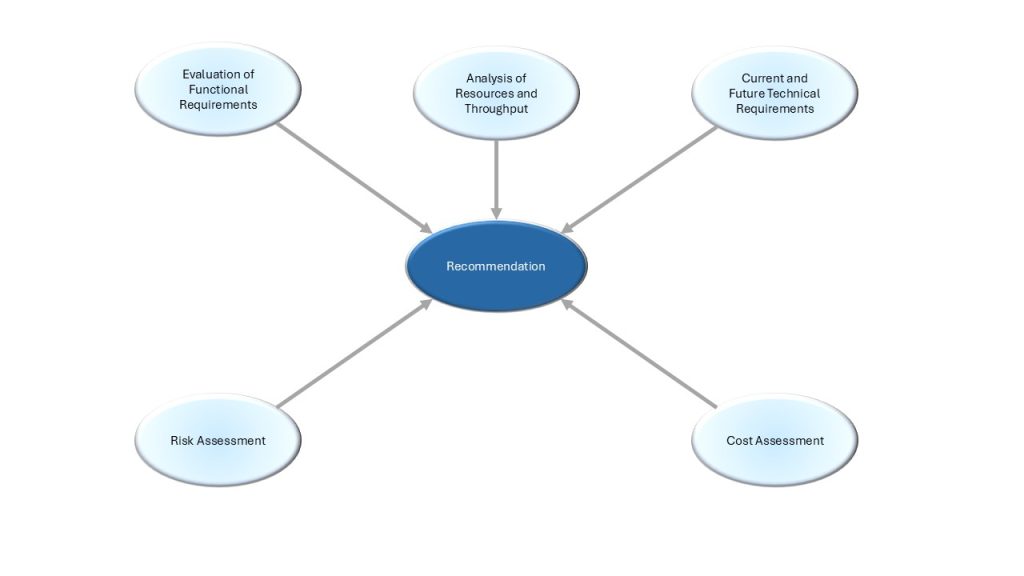
Below are several key components that should be included in such an analysis to ensure it is as comprehensive as possible and accurately reflects the client’s organizational situation.
Understanding the client’s warehouse processes
- Initial meeting with key stakeholders – the consultant should conduct workshops or meetings with departments such as logistics, operations, IT, and other teams responsible for warehouse management. At this stage, it is essential to gather detailed information about current warehouse processes, existing problems, and the expectations for the new system.
- Warehouse process mapping – create a map of the client’s warehouse processes, including goods receipt, storage, picking, shipping, resource management, and inventory control. It is essential to consider specific operations such as returns management, quality control, cross-docking, etc.
- Identification of key performance indicators (KPIs) – what are the current KPIs (e.g., order fulfillment time, inventory accuracy) and what goals would the client like to achieve after implementing SAP EWM?
Assessment of functional requirements
To properly assess the functional requirements for SAP EWM (Basic or Advanced), a consultant should evaluate the following elements to ensure the chosen solution supports the client’s current operations and future growth:
- Number and types of warehouses – does the client operate a single warehouse or multiple locations? What is the size and complexity of these warehouses (e.g., rack height, number of locations, types of goods such as temperature-sensitive products or hazardous materials)?
- Degree of automation – are automated systems such as conveyors, robots, or automatic storage and retrieval systems (ASRS) already in use? If automation is not yet implemented, is there a plan to integrate automation in the future?
- Inventory management needs – does the client require advanced features like batch tracking, serial number management, quality control, or periodic inventory management? • If the client operates in pharmaceuticals, automotive, or food production industries, they may need these advanced features, making the Advanced version more appropriate.
- Handling of complex warehouse processes – does the client require advanced processes such as cross-docking, returns management, dynamic storage location management, or advanced order picking?
- Scalability and future growth – does the client anticipate business expansion or increased volume of warehouse operations?
Capacity and resource analysis
- Resource management – it is important to assess whether the client requires advanced warehouse workforce management, such as dynamic task allocation, productivity tracking, and worktime optimization.
- Warehouse load – it is crucial to understand the volume of goods the warehouse handles in receipts, shipments, and warehouse operations. Additionally, it should be evaluated whether these volumes are stable or variable (e.g., seasonal demand spikes).
Current and future technological requirements
- Integration with other SAP systems – is the client already using other SAP modules, such as SAP GTS, SAP Transportation Management (TM), DAS, or SAP Yard Logistics? Understanding the existing SAP landscape helps determine the level of integration required for SAP EWM.
- Ability to implement automation and IoT technologies – if the company plans to deploy technologies such as RFID, automated storage systems, or the Internet of Things (IoT), it is essential to assess whether SAP EWM Advanced can accommodate these requirements. Integration with automation technologies and IoT systems will be a key consideration.
- IT infrastructure –it is critical to analyze the available IT resources (hardware, software) and the capabilities of the IT team to support the system. Does the client have the necessary IT infrastructure to implement the more advanced features of SAP EWM, or would additional investments in hardware, software, or team training be required for a smooth deployment?
Cost evaluation
- Licensing cost – the SAP EWM Advanced version requires an additional license, which results in higher costs. The consultant should assess whether the expected benefits of implementing the advanced version justify the higher costs for the client.
- Implementation costs – analyzing the complexity of the implementation process. The Advanced version has a more complex setup, which may lead to a longer implementation time and higher consulting and system configuration expenses. The consultant should evaluate whether the client’s budget can accommodate these higher implementation costs and whether the investment will deliver the desired operational improvements.
Risk assessment
- Complexity of operations – if the client operates complex logistics processes, implementing the Basic version may not be sufficient and could risk inadequate support for key processes. Advanced features in SAP EWM Advanced are specifically designed to handle more sophisticated and varied logistics operations.
- Future flexibility – the Basic version may be limited in the case of dynamic company growth. If there is a high likelihood of warehouse expansion or the introduction of new logistics functions, investing in the Advanced version may be a better fit for future needs. It offers scalability and flexibility, enabling the company to adapt to increasing complexity without requiring a major system overhaul later.
Development of recommendations
- Preparation of the report – the consultant should prepare a detailed report that includes the analysis results, covering the client’s required functionalities, potential benefits of both versions, cost analysis, risks, and recommendations.
- Presentation of results to the client – presenting the analysis results in a clear and understandable way to decision-makers. This should include the advantages and limitations of both versions of SAP EWM, along with an estimate of the implementation costs and potential operational savings from choosing either the Basic or Advanced version.
- Understanding the budget – the consultant should tailor their recommendations to the client’s budget, explaining which functionalities are critical now and which can be implemented in future stages.
The role of the consultant in the selection of the SAP EWM version
The analysis of the choice between SAP EWM Basic and Advanced requires a detailed understanding of the client’s warehouse processes, future needs, available resources, and budget. The consultant’s key role is to gather information and explain to the client the benefits of each version of the system and the risks associated with limiting functionalities in the Basic version.
The consultant must guide the client to the best solution. They should objectively analyze the results, discuss them with the client, and recommend the appropriate solution. The client expects everything to be properly explained and presented in a way that is understandable to them.
It is crucial that the client provides necessary resources from their organization, such as process owners, key users, and area leaders, during the recommendation preparation process. This is essential for the consultant to gather as much internal information as possible and map and analyze the existing processes effectively. Without access to these key resources, the analysis may be incomplete, which could lead to negative consequences in the later stages of the process.
After understanding the processes, the consultant should analyze whether any business processes can be improved or changed to align with SAP Best Practices. This requires active involvement and honesty from both sides. When both parties are engaged in this process, there is a greater chance of conducting a correct analysis and providing a targeted recommendation.
The client, being involved from the beginning in analyzing and selecting the appropriate version, will have a more objective approach in the project’s later phases. Since they were already highly involved in this initial phase, it will help avoid common comments like: “I wasn’t involved when we made that decision,” “We have another process we didn’t mention,” and so on.

Summary
In summary, the more time and energy the consultant and the client invest in the analysis and recommendation phase, the smoother the subsequent stages of the project will be. Therefore, it is essential to treat this phase professionally and seriously, as it will make the later stages of the project easier to manage.
Sources
Information gathered based on publications from:
- SAP Poland
- Extended Warehouse Management (EWM)
- SAP
- SAP PRESS Integrating EWM in SAP S/4HANA®
***
If you are interested in SAP, be sure to also review other articles by our experts.













An insightful and well-structured guide on choosing between SAP EWM Basic and Advanced. The practical tips and clear decision-making framework are invaluable for clients.